Witch the Showdown Fire, Ice, Thunder & Full Burst
Fill gauges on purpose, cash them on openings, and stop wasting burst turns.
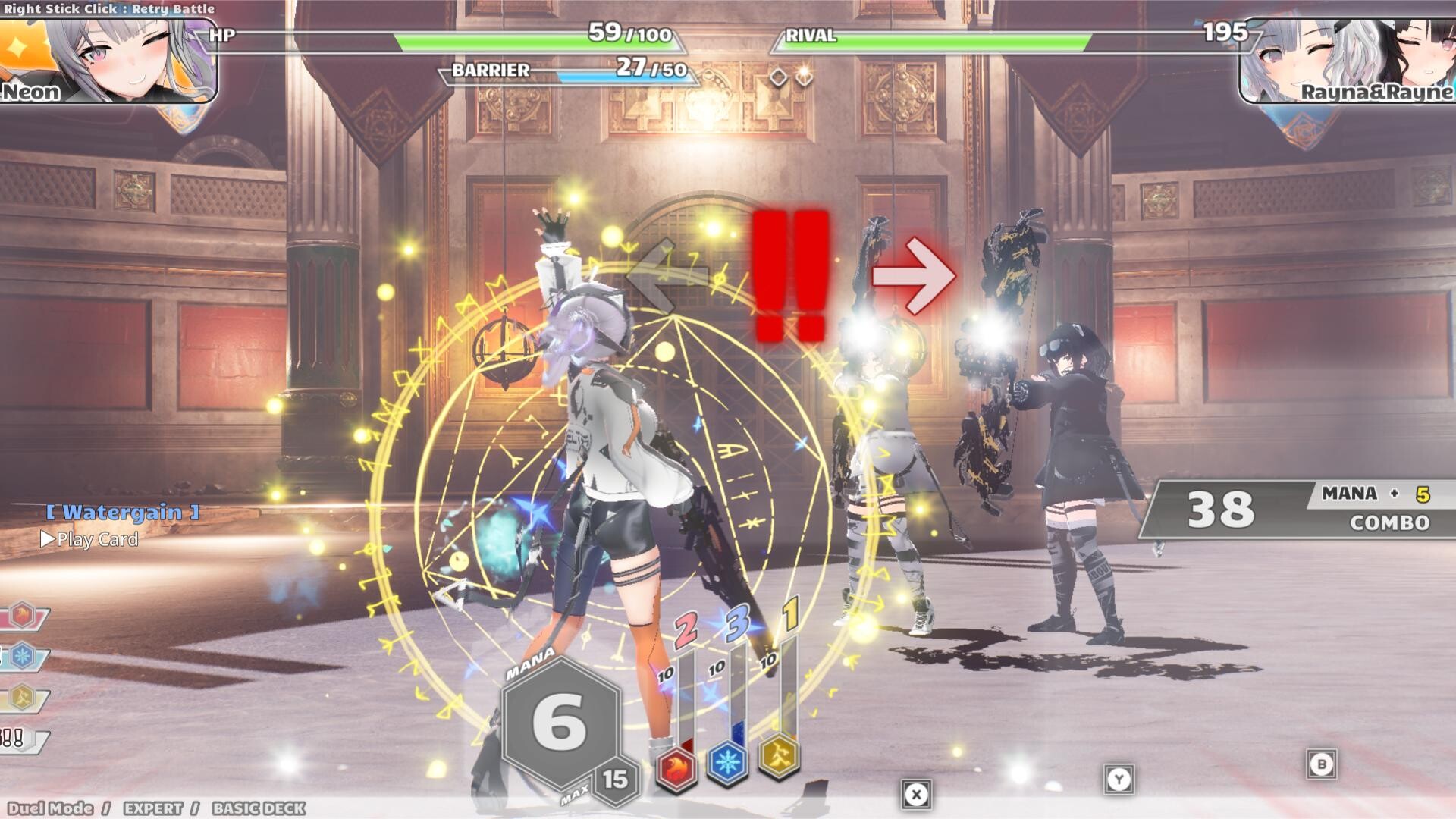
Elemental bursts are how Witch the Showdown turns steady parry-funded Mana into swing turns. Fire, Ice, and Thunder gauges fill as you play into their packages; cashing them — especially lining up a Full Burst — separates clean clears from chip-death scrambles. Bursts amplify good defense and good deckbuilding; they do not replace either.
This guide explains what each element wants, how to fill gauges without drowning your ten-card list, and when to hold versus spend. For mode context see Getting Started and Tournament mode. More tutorials sit on the Guides hub.
The three gauges in plain language
Fire leans raw damage and aggressive cash-outs. Build Fire when you can create or recognize long punish windows after a clean parry. Fire without openings is just a prettier way to get hit while animating.
Ice leans safety and automatic parry value during dense strings. Build Ice when a foe — Militia pressure, twin overlaps, late Tournament compression — denies you leisurely punish time. Ice lets you stay in the defend loop long enough for your damage plan to matter.
Thunder leans Mana regeneration and extra rotations. Build Thunder when your list wants to replay a strong sequence in the same fight phase. Thunder shines when your parry success rate is already decent but your curve needs a second wind.
You do not need equal investment. Most strong ten-card decks pick a primary gauge and a secondary support, then ignore the third except for incidental fill.
Full Burst without the mythology
Full Burst is the big combined payoff when gauge timing aligns. It is not a panic button for red health. Ideal Full Burst turns happen when:
- You just secured a real opening (often after a committed parry),
- Your hand can spend the Mana the burst tempo creates or requires,
- The foe is not about to start an unskippable string that cancels your animation greed.
If any of those three is missing, take a smaller single-element cash-out — or simply defend. Tournament runs die constantly to “I had Full Burst so I forced it.”
Filling gauges on purpose
Gauges fill through cards and play patterns tied to each element. That means deck construction decides whether a gauge is a plan or a coincidence.
- Count how many of your ten cards actually feed your primary element.
- If the answer is “two, plus vibes,” you will stare at empty gauges in boss phases.
- If the answer is “eight Fire cards and no safety,” you will fill Fire while dying to strings Ice could have softened.
Use Duel’s pre-built decks to feel a coherent fill rate before you invent a custom Frankensteined list. Then check the card tier list for high-impact tools that still fit your curve.
Timing bursts around defense
Think in fight phases:
Opener phase: prioritize learning the telegraph and banking a little Mana. Incidental gauge fill is fine; forced burst setups are not.
Mid fight: cash Ice if a dense string is coming, Thunder if you need another rotation, Fire if a long punish just appeared.
Close: Full Burst or Fire finishes when the foe’s pattern breaks and your hand is ready. Do not Full Burst into a twin cross-up you have not parried cleanly once.
Mrs. Mino and other early EA bosses forgive greed more than Reina and Rain. Promote your burst ambition only as fast as your defense notes improve.
Witch differences
Luze and Neon share the same elemental trio but may prefer different fill tempos depending on their comfortable cards. After a few Duels, note which gauge hits actionable levels first on that witch with your parry rate. Build the deck toward that reality. When the third witch arrives at full launch, repeat the measurement instead of copying an EA template blindly.
Element choice by mode
Duel: experiment. Rematch the same foe with Fire-primary, then Ice-primary, and compare clear health. Short loops teach timing faster than theory.
Story: follow the pace of encounters; use bursts as learning tools, not speedrun requirements.
Tournament: lock an identity early. Shops should deepen the primary gauge or fix a survival hole, not rotate elements every node. See Tournament mode for shop discipline that keeps burst plans intact.
Difficulty and burst windows
As you climb Rookie toward Master, telegraphs compress and punish windows shrink. That usually means:
- Ice value rises on string-heavy foes,
- Fire cash-outs must be more precise,
- Thunder becomes a bridge when you need two short spends instead of one long fantasy combo,
- Full Burst requires cleaner setups.
Adjust with the difficulty guidance rather than forcing the same Rookie burst script on Master.
Common burst mistakes
- Chasing all three gauges equally inside ten cards.
- Cashing Fire during a dodge-only trap pattern.
- Holding Full Burst forever and dying with gauges full.
- Ignoring Mana: a burst that leaves you unable to play follow-ups wastes the opening.
- Skipping defense drills because “my burst damage is high.” High damage on the floor still loses.
Practice plan
- Pick one witch and one primary element.
- Build or borrow a ten-card list that feeds that gauge (confirm roles via deckbuilding).
- In Duel, attempt exactly one intentional cash-out per fight after a clean parry.
- Note whether you failed from timing, hand, or telegraph knowledge.
- Only then try lining up Full Burst in a Tournament mid-floor fight — not on an unlearned final boss.
Keep controls comfortable so burst confirms do not eat your next parry input. Track new elemental cards on the Early Access roadmap as the pool grows from ~31 toward ~60 cards. Official links remain on the links hub, and broader rankings on the tier list.
Elemental bursts reward intention. Fill the gauges your deck actually builds, cash them on openings your parries create, and treat Full Burst as a planned sentence — not a scream when health turns red.
Frequently Asked Questions
Quick answers for Witch the Showdown players.
What do Fire, Ice, and Thunder each do?
Fire leans damage, Ice leans safer automatic parry value during dense strings, and Thunder leans Mana regeneration for extra card rotations.
When should I trigger Full Burst?
After a real opening, when your hand can follow up, and when the foe is not about to cancel you with an unskippable string. Do not panic-cast on red health.
Can one deck maximize all three elements?
Rarely inside ten cards. Choose a primary gauge and a secondary support so fills happen on time.
Why do my gauges stay empty?
Your list probably does not feed that element enough. Rebuild toward fewer, more focused elemental cards instead of dabbling.
Should I learn bursts before parrying well?
No. Bursts amplify Mana and openings created by defense. Practice parry timing first, then add intentional cash-outs.
Do Luze and Neon use different elements?
Both use Fire, Ice, and Thunder. Comfort and fill tempo differ by witch and card pool, so measure which gauge comes online first for your play.