Witch the Showdown Combat, Parry & Mana Tempo
Defend first, fund Mana, then spend cards — the core fight loop explained.
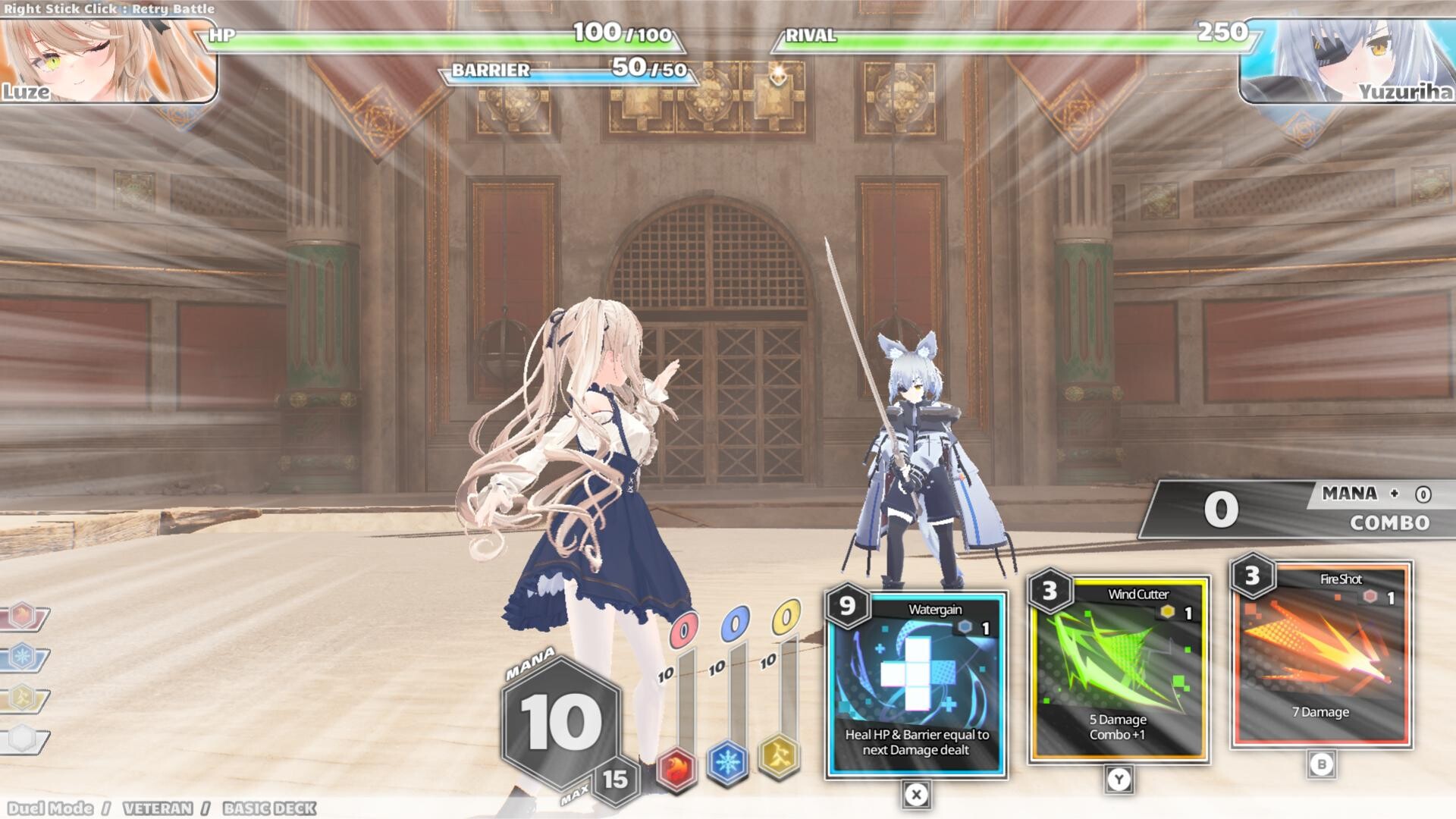
Every win in Witch the Showdown starts on defense. You watch a telegraph, parry or dodge, convert that success into Mana, and only then spend cards from your ten-card battle deck. Players who treat parrying as a side minigame run dry mid-combo. Players who treat it as their economy clear Early Access bosses with room to spare.
This guide focuses on timing, Mana tempo, and how defense choices feed Fire, Ice, and Thunder plans. For hand construction see deckbuilding; for gauge cash-outs see elemental bursts; for onboarding context return to Getting Started or the Guides hub.
The loop under pressure
- Enemy winds up.
- You parry (preferred when the window is fair) or dodge (preferred when the window is unfair or you need repositioning).
- Mana arrives according to the quality of that defense.
- You spend Mana on cards that either end the opening, set up an element, or buy the next safe window.
- Repeat until the foe’s pattern breaks or your gauges enable a burst turn.
Missed defenses cost health and future Mana. That double penalty is why “just tank and dump cards” fails on Master and often fails earlier against twins like Reina and Rain.
Parry versus dodge
Parry is your default when the telegraph is readable. It trains the same timing you need for Ice-assisted lines and keeps you in range to spend Mana immediately. Aim to parry the first hit of a string so the rest of the sequence becomes a planned punish instead of a panic scramble.
Dodge is the escape hatch for delayed hits, wide sweeps, or patterns you have not learned. Dodging into a bad angle still hurts — treat it as intentional spacing, not a mash. If you dodge every attack forever, your Mana income stalls and your deck never comes online.
A practical drill in Duel: fight Mrs. Mino or Militia twice. First fight, only parry when you are sure. Second fight, allow one deliberate dodge on the scariest move. Compare ending Mana and health. You want more successful parries each rematch, not more heroic last-second dodges.
Reading telegraphs
Early Access foes telegraph with animation, audio, and UI cues. On Rookie, windows are generous so you can map the pattern. On higher difficulty steps, the same tells compress — your homework from Duel becomes mandatory.
Break each boss into three questions:
- What is the opener I must respect?
- Which move is free Mana if I parry cleanly?
- Which move is a dodge-only trap that punishes greed?
Bakusei, Yue, Sianore, and Mei each punish different greed habits. Twins add overlapping timings — if you fixate on one sister’s swing, the other eats your health. Practice them in Duel with a pre-built deck before a Tournament stub ends your run.
Mana as tempo, not a score
Mana is permission to act. Banking a little is good; banking forever while you take chip damage is not. Spend rules of thumb:
- Openings after a clean parry: spend into damage or setup cards that finish before the next telegraph.
- Scary upcoming string: hold Mana for Ice-related safety or a cheap defense tool instead of dumping Fire damage early.
- Thunder opportunities: spend when your deck needs a second rotation in the same fight phase.
Your battle deck only has ten cards. That means Mana spikes must translate into known sequences, not random topdeck hopes. If your hand cannot spend a full Mana bar productively, the problem is deck construction — fix it in the deckbuilding guide and with the card tier list.
Real-time versus turn-based
Real-time combat is where parry skill lives. Use it to learn every EA boss. Turn-based slows the same encounters so you can plan card order, but it will not teach your fingers the window. Many players clear a Story beat in turn-based, then lose the identical pattern in Tournament real-time — that is a practice gap, not bad luck.
Suggested path: learn a boss in real-time Duel → refine the card sequence in a calmer bout → take that hybrid knowledge into Tournament.
Elements during the defend phase
Defense and elements are linked. Ice value often shows up when you need automatic parry help during dense strings. Fire wants confirmed openings so damage does not get interrupted. Thunder wants you alive long enough to spend the regenerated Mana. Do not chase Full Burst while you still miss the first hit of a combo; gauge payoffs amplify good defense, they do not replace it. Details sit in elemental bursts.
Witch-specific notes
Luze and Neon share the defend → Mana → cards loop, but their comfortable curves differ. If one witch feels “Mana poor,” check whether you are missing parries or forcing a deck that costs more than your current defense success rate can fund. Swap witches only after you can clear a Duel rematch on defense alone with minimal card greed.
Common mistakes
- Mashing parry early. Early inputs whiff and leave you exposed; wait for the tell.
- Dodging everything. Safe but Mana-starved; your ten-card deck never matters.
- Spending Mana on red health panic. Dying with empty resources is worse than dying with a plan — but spending randomly into a blocked animation is also a waste. Reset to defense first.
- Ignoring controls. Bad bindings create artificial “frame traps” that are really finger travel time.
- Jumping difficulty too fast. Climb Rookie toward Master only when rematches feel readable. The difficulty page helps you choose the next step.
Training routine (20 minutes)
- Five minutes: rematch one Duel foe, parry-only on the opener.
- Five minutes: allow dodges only on the marked trap move.
- Five minutes: practice a two-card Mana spend after each clean opener.
- Five minutes: note which element gauge filled naturally; plan one burst attempt next session.
Carry those notes into Tournament mode. Shops cannot save a run if your parry success rate collapses under longer fights.
Linking combat to the rest of the wiki
When a fight feels impossible, diagnose in order: telegraph knowledge → binding comfort → Mana income → deck spend efficiency → burst timing. Use Getting Started if the modes still blur together, deckbuilding if your hand cannot convert Mana, and the Early Access roadmap if you are waiting on future tools. Official links stay on the links hub.
Master the parry, and every other system in Witch the Showdown gets cheaper. Miss it, and no tier-list card will bail you out.
Frequently Asked Questions
Quick answers for Witch the Showdown players.
Should I parry or dodge by default?
Parry by default when the telegraph is clear. Dodge marked trap moves or patterns you have not learned yet so you stay alive long enough to practice.
Why do I run out of Mana so often?
Usually missed defenses or a deck that costs more than your success rate can fund. Fix parry consistency first, then lower average card costs.
Does turn-based remove the need to parry well?
No. Turn-based helps planning, but Tournament and higher difficulties still punish players who never learned real-time windows.
How do elements interact with defense?
Ice supports safer parry stretches, Fire wants confirmed openings, and Thunder helps you afford another card rotation after you survive.
Which bosses are best for practice?
Start with early EA foes such as Mrs. Mino or Militia in Duel, then move to denser patterns like the twins once your opener parry is stable.